Ryder Way Access
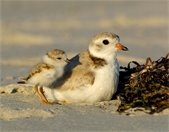
Nine pairs of plovers nested along Ryder Way this season, and least terns nested in three colonies along the roadway. There is still one brood of unfledged plover chicks and an unhatched plover nest along Ryder Way, as well as numerous least tern chicks between the Day Parking Area and the Crossover.
The southernmost unfledged chicks are currently located south of the Day Parking Area, so the areas beyond the Fishermen’s Turnaround close to vehicles at 7:00pm, including for fishing access. The unhatched plover nest is located south of the Fishermen’s Turnaround, and when it hatches around July 15, the night-time vehicle restriction will move southward again to near the first cottage on the beach. Any changes in nesting activity and vehicle access along Ryder Way will be updated on the Long Beach Information page.
The state and federal guidelines for managing recreational activities in piping plover and least tern nesting areas require that the road close to vehicles in the areas where unfledged chicks are present. Under normal circumstances, vehicles would currently be limited to the areas up to and including the Fishermen’s Turnaround and would not be able to access the Crossover, the Day Parking Area, or any of the other parking areas beyond the Turnaround. However, the Town participates in the statewide Habitat Conservation Plan for Piping Plover, which allows some flexibility for vehicle access along the road when chicks are present. Because of this permit, vehicles are able to access the whole length of the road, parking lots and roadside parking areas, but with reduced hours. The Natural Resources staff monitors the location of the chicks and manages traffic if they approach or cross the road or parking areas.
Areas where unfledged chicks are present are marked with signs. When traveling through these areas, be alert to the possible presence of chicks and adult plovers in the road and stop to let them pass. If you do see chicks in or near the road, please notify the staff. If a take occurs (e.g., a chick is killed), the U.S. Fish & Wildlife Service and Massachusetts Division of Fisheries & Wildlife may suspend use of the road and vehicle access will be limited to areas south of where the chicks are located, so please be cautious when driving through these areas.


 Share on Facebook
 Share on Twitter
 Share via Email
